
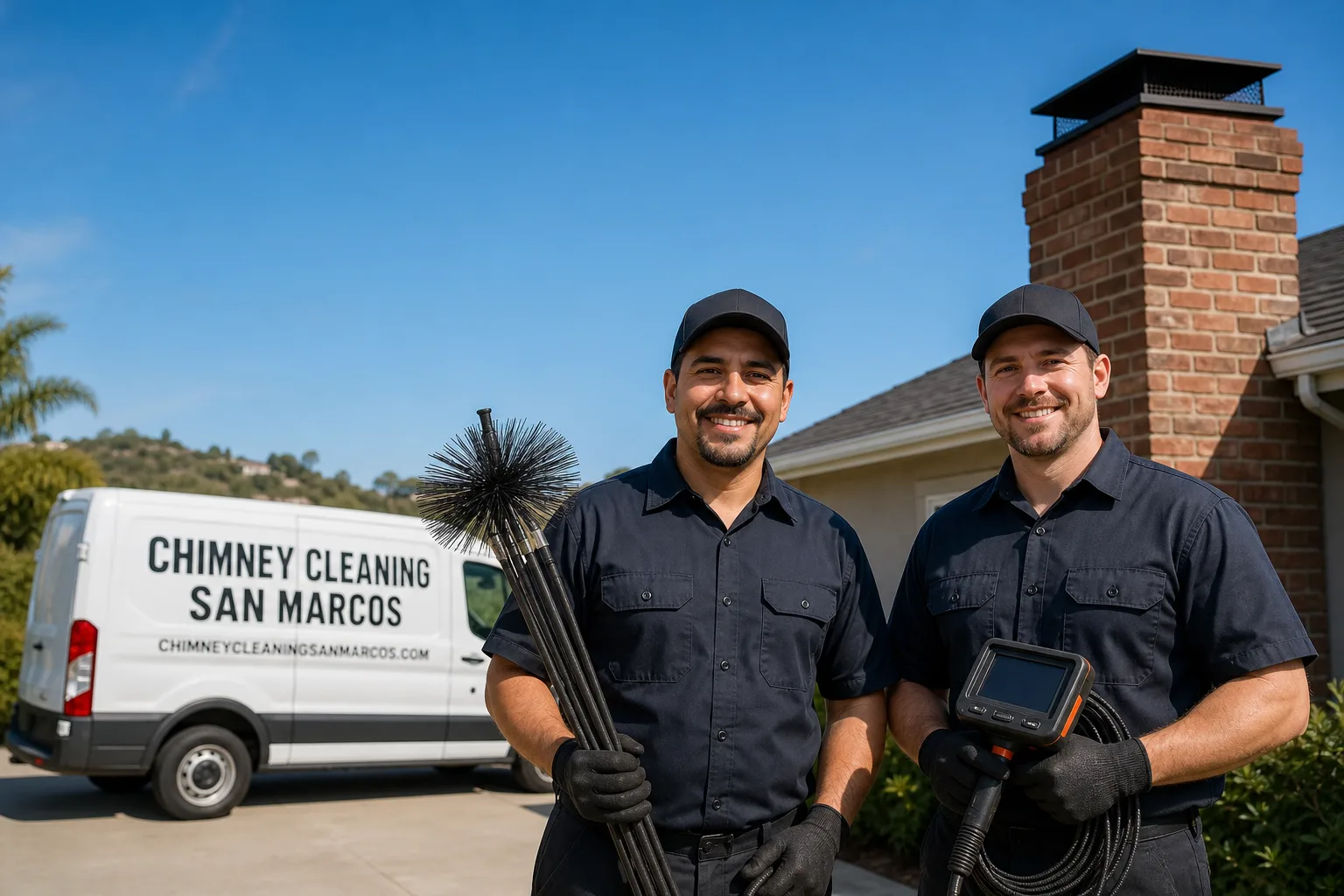
 Sweep & inspection
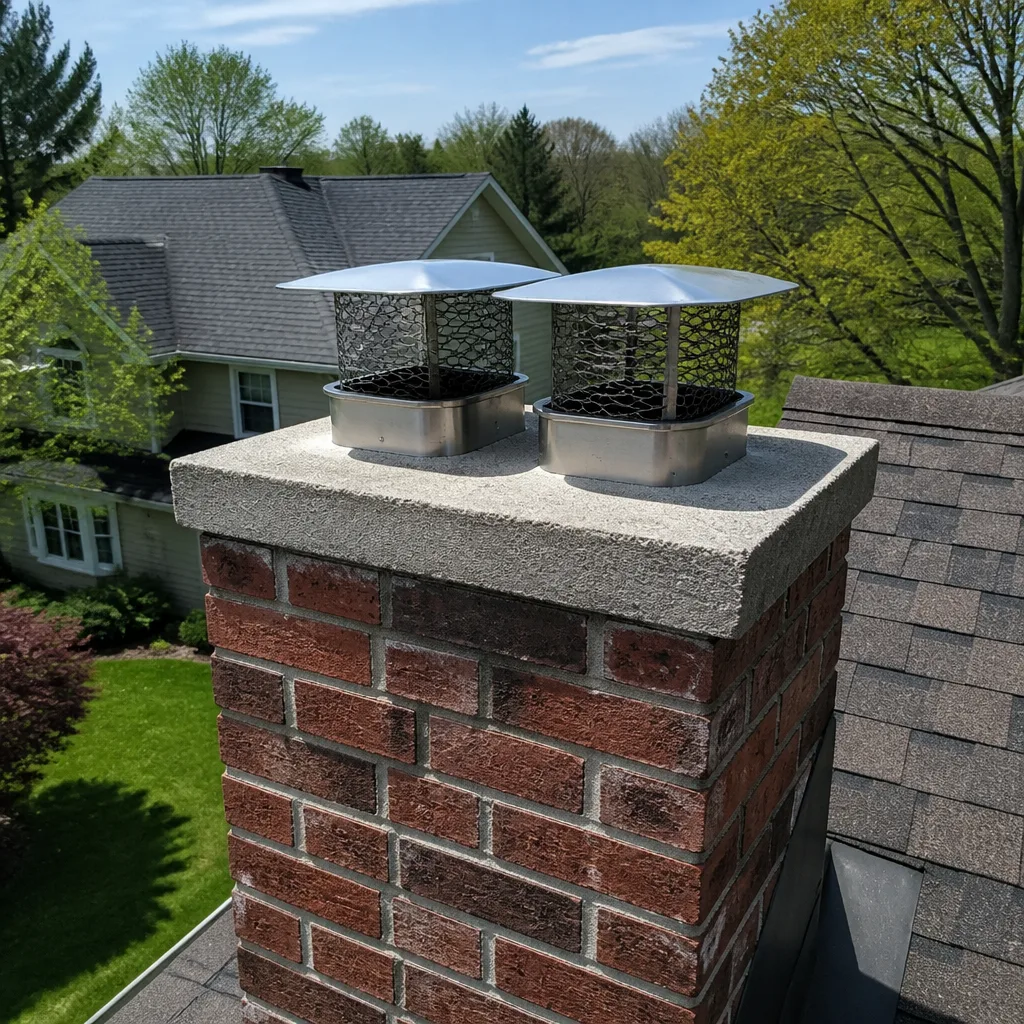
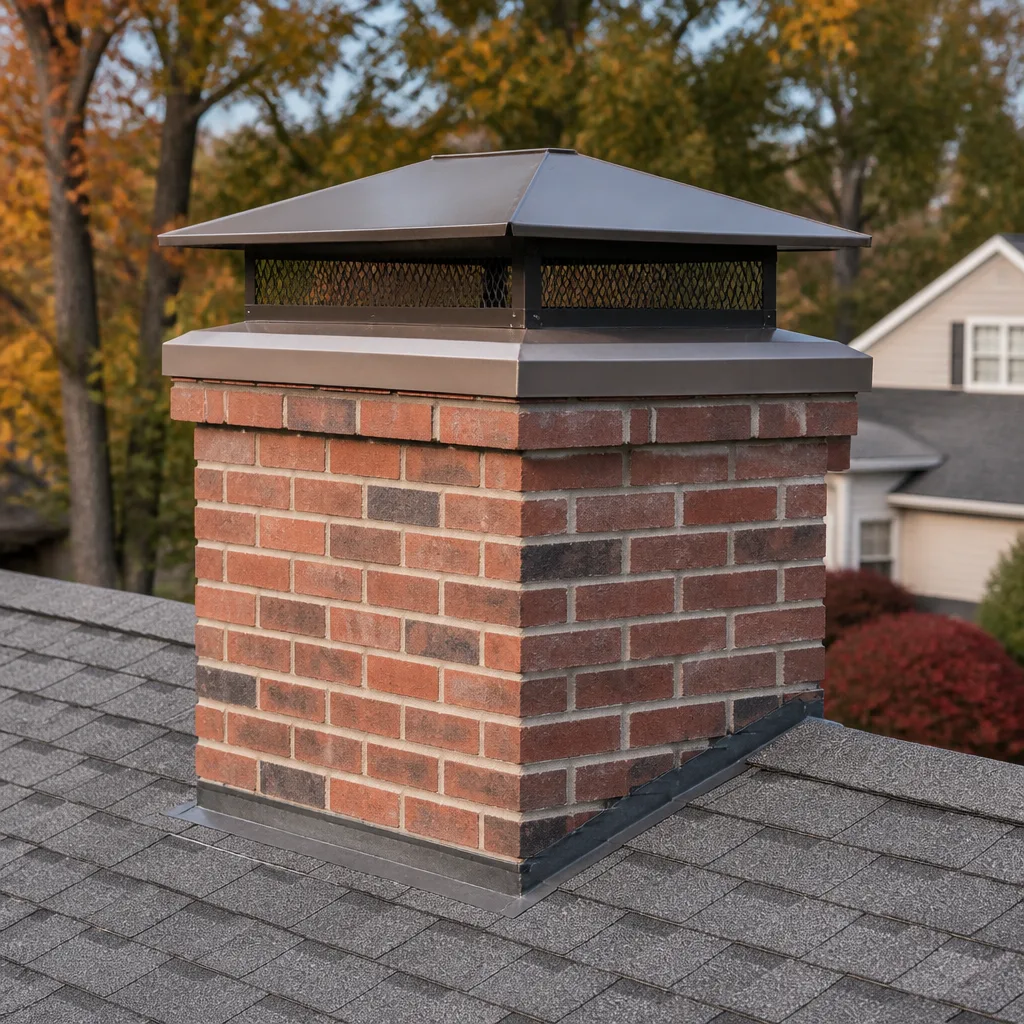 Caps & crowns
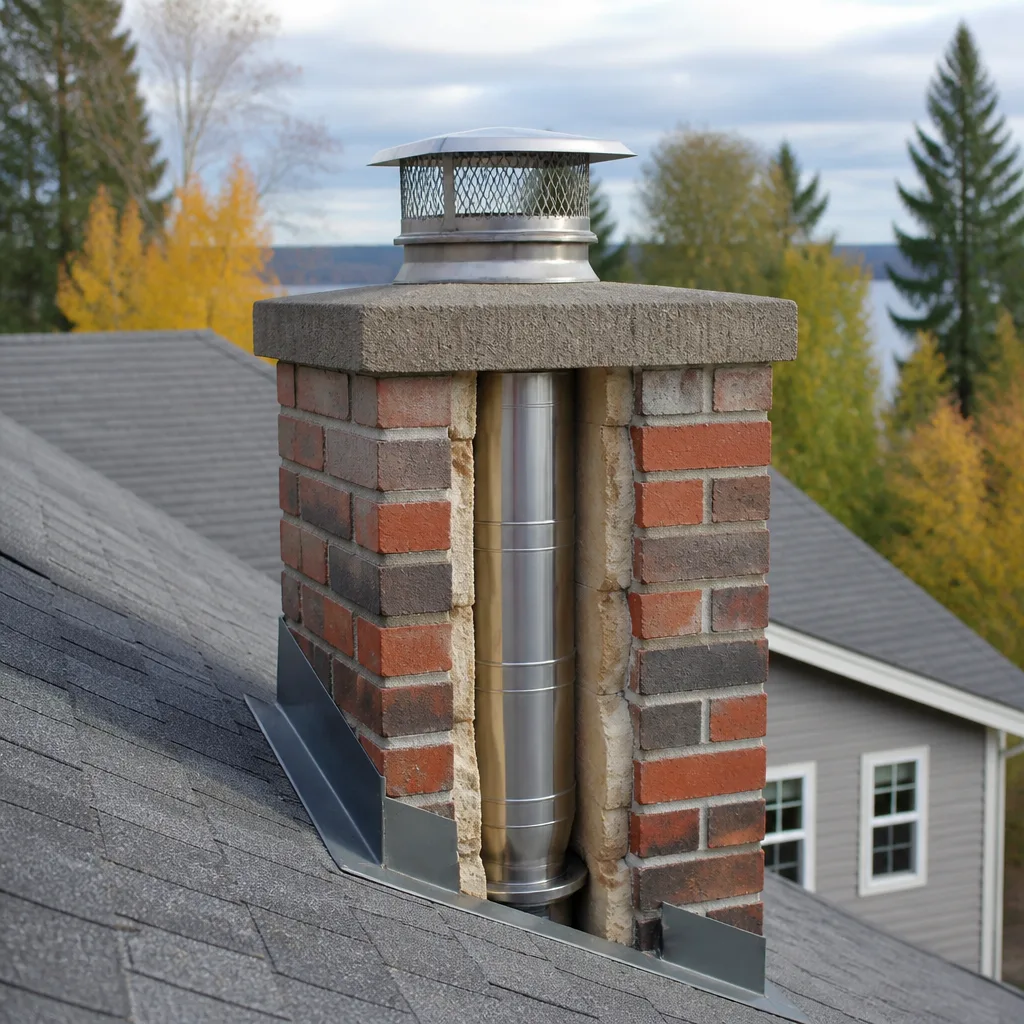 Flue relining
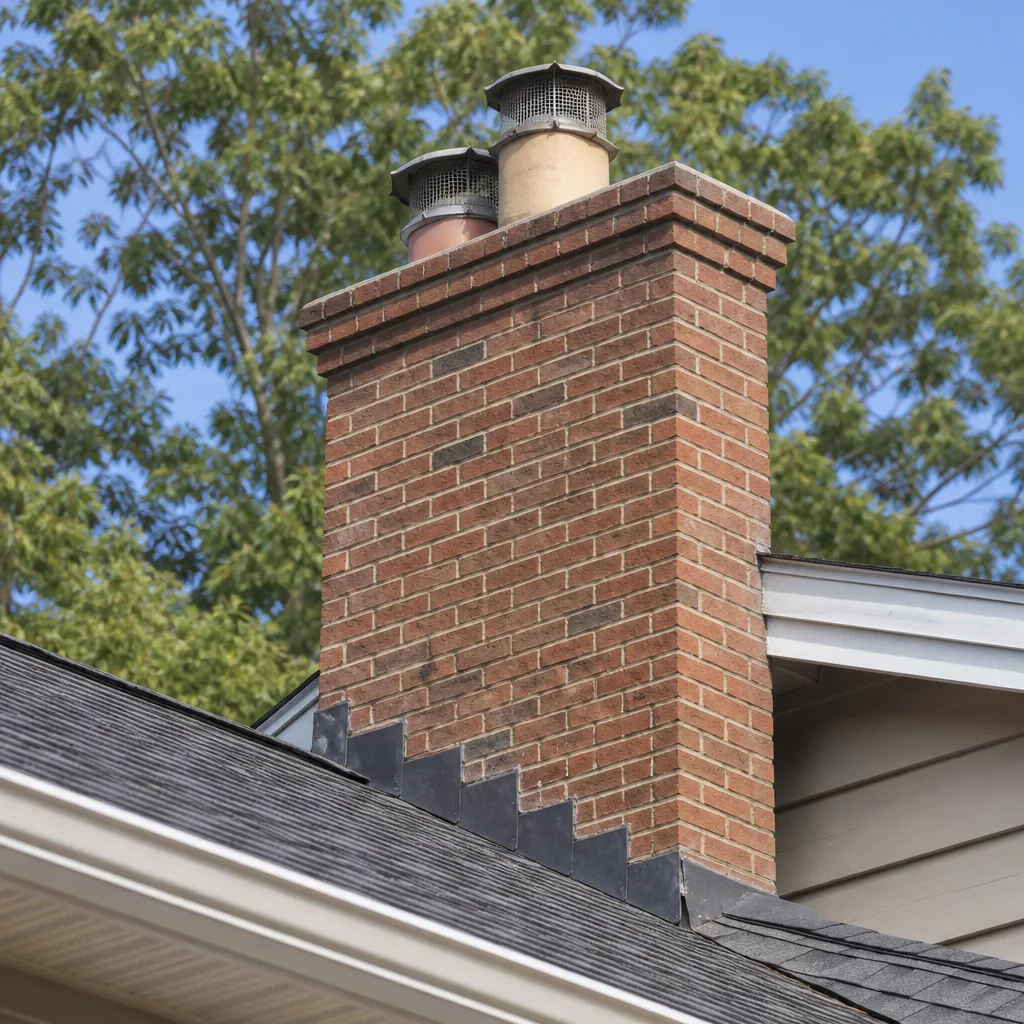 Masonry repair
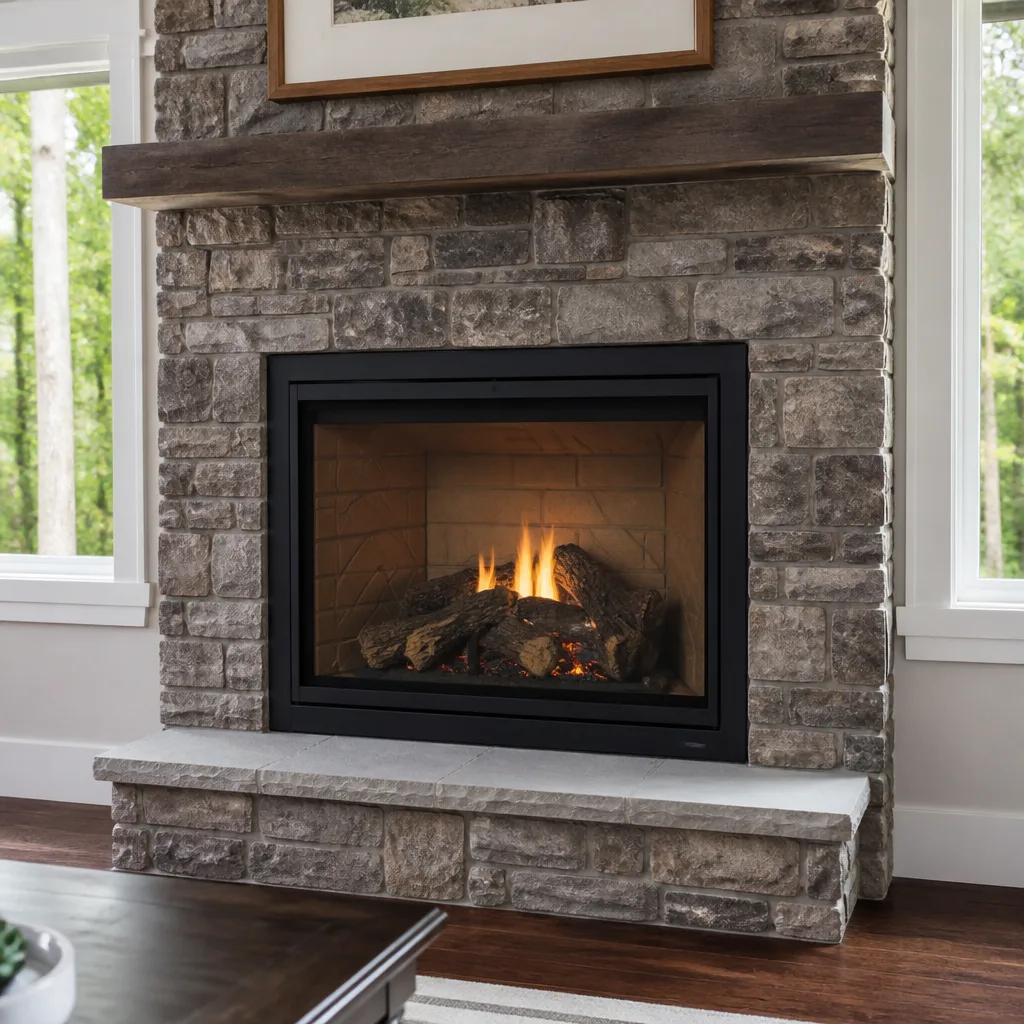 Gas fireplace service
Level 1 sweep and inspection to the NFPA 211 annual standard - flue, crown, cap, and flashing checked and photographed
Chimney sweep logs do not sweep chimneys. They loosen some creosote - which then falls where a brush and vacuum still have to collect it.
Fast, Reliable Chimney Sweep Across Vista
A chimney sweep in Vista typically runs $189 – $329 for a standard open-flue fireplace, and most Vista homes built between 1970 and 1990 should expect a Level 1 inspection plus creosote removal as the baseline service. We’re Chimney Cleaning San Marcos, a dedicated chimney and venting specialist, and we work throughout Vista’s 92081, 92083, 92084, and 92085 ZIP codes year-round. Call (866) 651-2603 for a free estimate, and we’ll give you an honest read on what your flue actually needs.
Vista’s dry inland climate and Santa Ana wind season doesn’t just make your fireplace work harder. It changes what we find inside your flue, and it changes what actually matters when we clean it. We know Vista’s tract-home chases, its aging clay-tile flues, and its factory-built fireplaces better than any generalist ever will. Your flue is our only focus.
Why Chimney Cleaning San Marcos Is Vista’s Preferred Chimney Sweep Company
Vista homeowners call us because we’re a Chimney Sweep specialist, not a handyman with a brush attachment. Every technician on our roster works exclusively in chimneys and venting systems. That matters in Vista specifically, because so many of the city’s 1960s – 1990s tract homes use factory-built metal fireplaces and clay-tile flues that don’t respond well to generic cleaning methods. A wrong brush type or an over-aggressive rod can crack a clay tile liner. We see that damage every year, often from previous cut-rate sweeps.
Our lead, Noel Stratton, set the standard we still work to: diagnose first, clean what needs cleaning, and never recommend work the homeowner can’t verify. That’s why every service we do includes camera inspection and a photo report you can look at yourself. If we say a liner needs attention, you’ll see it. If we say it can wait, we’ll say that too. In Vista, where a neighbor’s flue shares your chase, that honesty matters more than anywhere else.
We work with professional-grade materials from DuraFlex, HeatShield, Famco, Copperfield, Gelco, and Olympia Chimney. These aren’t big-box brands. They’re what certified chimney professionals across the country spec for liner work and repair. For Vista homeowners, that means if we find a problem during the sweep, we can often fix it in the same service relationship rather than handing you off to someone else. We find it, we fix it.
Styles & brands we work with
- Sweep & inspection
- Caps & crowns
- Flue relining
- Masonry repair
- Gas fireplace service
Chimney Services in Vista
Chimney Services in Vista start with understanding the building you live in. Most of Vista’s housing is single-family tract construction from the 1960s through the 1990s. Many of these homes were built with factory-built metal fireplaces and clay-tile flues, not traditional masonry. A routine chimney cleaning here still needs a technician who knows how to handle both. Older downtown-adjacent properties and rural-ranchette homes add masonry chimneys that may need repointing after decades of dry heat and Santa Ana wind.
A standard chimney sweep in Vista runs $189 – $329. A Level 1 inspection runs $129 – $199 when booked with a sweep, and a Level 2 inspection, which is the one we recommend for any Vista home that shares a flue chase or hasn’t been scoped in years, runs $249 – $399. Creosote removal, especially the third-degree glazed creosote common in lightly used inland flues, may add $80 – $180 depending on severity.
Level 1 and Level 2 Inspection
A Level 1 inspection is the visual check that happens with every sweep: accessible portions of the flue, the firebox, the damper, and the cap. In Vista, where a neighboring unit may vent into the same stack, a Level 1 alone often isn’t enough. A Level 2 inspection adds camera scoping of the entire flue interior. This is how we catch the cross-contamination risks on shared chases that a brush-and-go company misses.
Creosote and Soot Removal
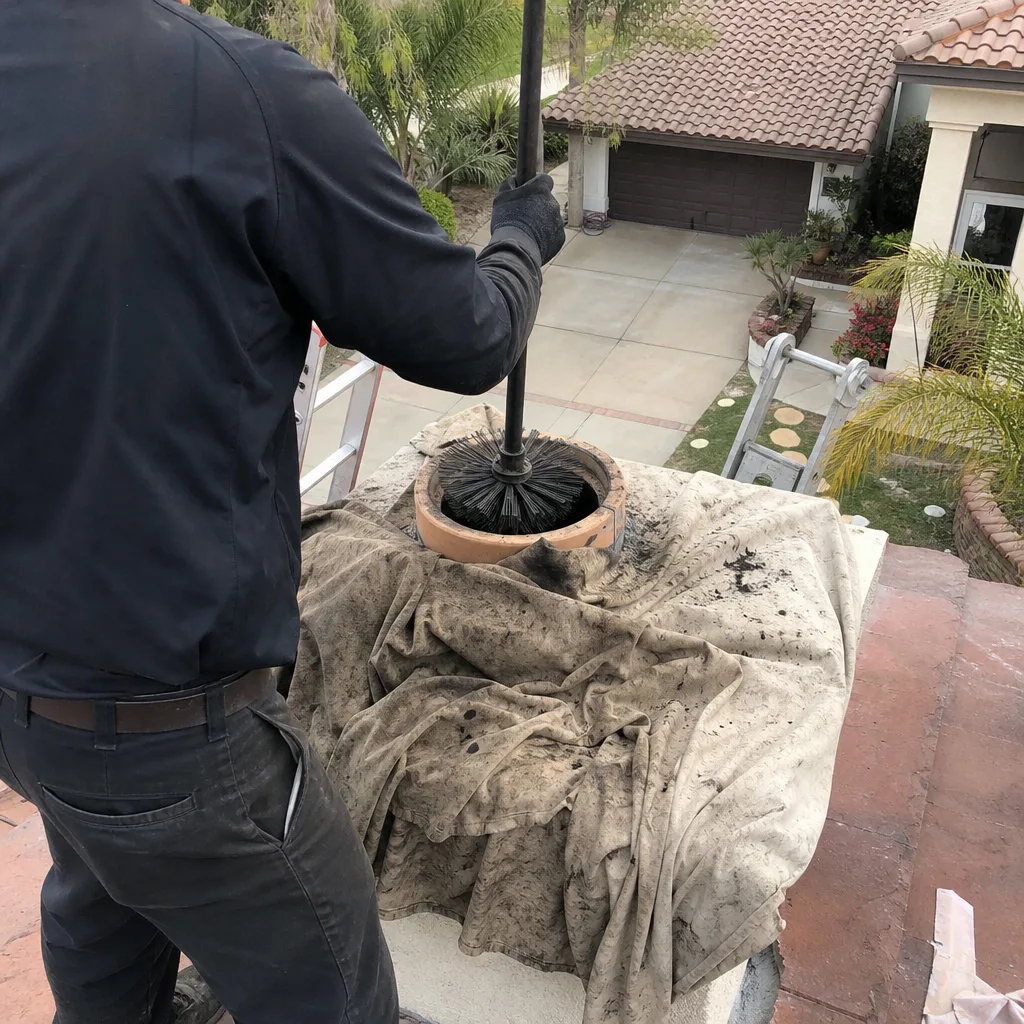
Creosote glaze forms when a flue gets hot but not hot enough, which is exactly what happens in Vista’s pattern of occasional winter fires after long dry months of no use. Soot removal handles the soft black coating. Glazed creosote is different: it’s hard, shiny, and a brush alone won’t remove it. We use professional-grade removal methods and, where indicated, HeatShield application to restore the flue surface rather than just scrape it.
Chimney Sweep Certified in Vista
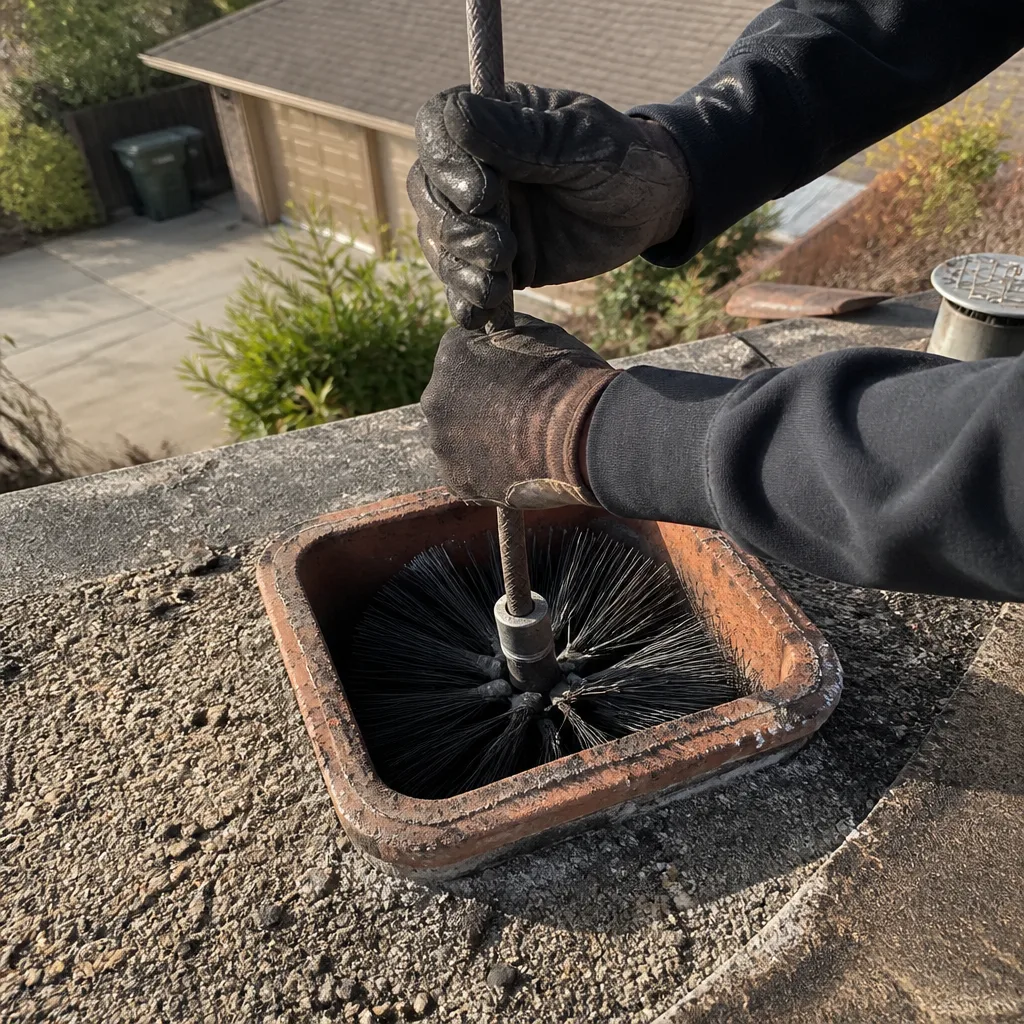
Chimney Sweep Certified in Vista means something specific here: a technician who understands shared flue chases, stacked tract-home fireplaces, and the damage Vista’s Santa Ana winds do to caps and spark arrestors. It’s not a patch on a shirt. It’s training that prevents us from cleaning one flue while unknowingly pushing debris toward an adjacent appliance’s vent. In a Vista home with two or three factory-built fireplaces sharing a single chase, that mistake can push combustion gases into a neighbor’s living space.
We’re asked often if we’re a generalist handyman service. No. Every technician we send into Vista works chimneys and venting systems full time. That’s the entire job. When we scope your flue, we’re not also thinking about a plumbing job across town. Your flue is our only focus.
Annual Sweep and Fireplace Cleaning
For Vista homeowners who burn wood even semi-regularly, an annual sweep is the baseline. The National Fire Protection Association recommends a sweep whenever creosote builds to 1/8 inch or more. In Vista, where flues sit unused through long dry summers and then take concentrated winter use, that threshold arrives faster than people expect. Fireplace cleaning includes the firebox, the damper assembly, and the visible flue surfaces.
Shared Chase and Stacked Flue Diagnostics
This is where the Vista job differs from most other markets. A 1978 two-story tract home on a tight street in 92083 often has multiple fireplaces stacked vertically in one chase. Cleaning one without scoping the adjacent flue can miss a blocked cap, a shifted tile, or a cross-draft that only appears when both units burn. We build our Vista inspections around neighbor-adjacent stacks because that’s what the housing stock demands.
Trusted Brands We Service in Vista
We stock parts and materials for Vista customers from the same professional brands we use on every job. DuraFlex in Vista means liners, HeatShield restoration products, and Copperfield caps that are industry-standard among certified chimney technicians, and we keep common Vista sizes ready to go. That means a cracked cap or a damaged liner top often gets repaired in the same visit as the sweep, not two weeks later after a special order. For factory-built fireplaces in Vista’s tract homes, Famco components and Olympia Chimney accessories let us address common failures without replacing the whole unit. Professional-grade materials, not big-box substitutes. That’s the standard we hold, because Vista’s dry climate and wind exposure don’t forgive cheap parts.
Common Chimney Sweep Problems We See in Vista Homes
- Shared flue chases in attached tract homes. A clog or cap gap on one unit can cross-contaminate an adjacent appliance’s vent. This is caught only with a Level 2 inspection that scopes both flues, not just the one attached to the fireplace you use.
- Palm fronds and bird nests packed atop chimney caps. Vista’s hot, dry summers give birds months of undisturbed access. A packed cap blocks draft silently until the first fall fire backs smoke into the firebox. We routinely pull nests and palm debris from flues in 92083 and 92084.
- Santa Ana wind damage to caps and spark arrestors. Bent spark arrestors, loosened caps, and displaced flashing on clay-tile flues are the first thing we check after a wind event. In Vista, a damaged spark arrestor isn’t cosmetic. Fire-risk periods make it a genuine safety issue.
- Third-degree creosote glazing near the smoke chamber. Vista’s intermittent burn pattern, long idle months followed by concentrated winter use, produces hard glazed creosote that a brush alone won’t remove. It requires professional removal methods and sometimes HeatShield restoration to address properly.
See the difference
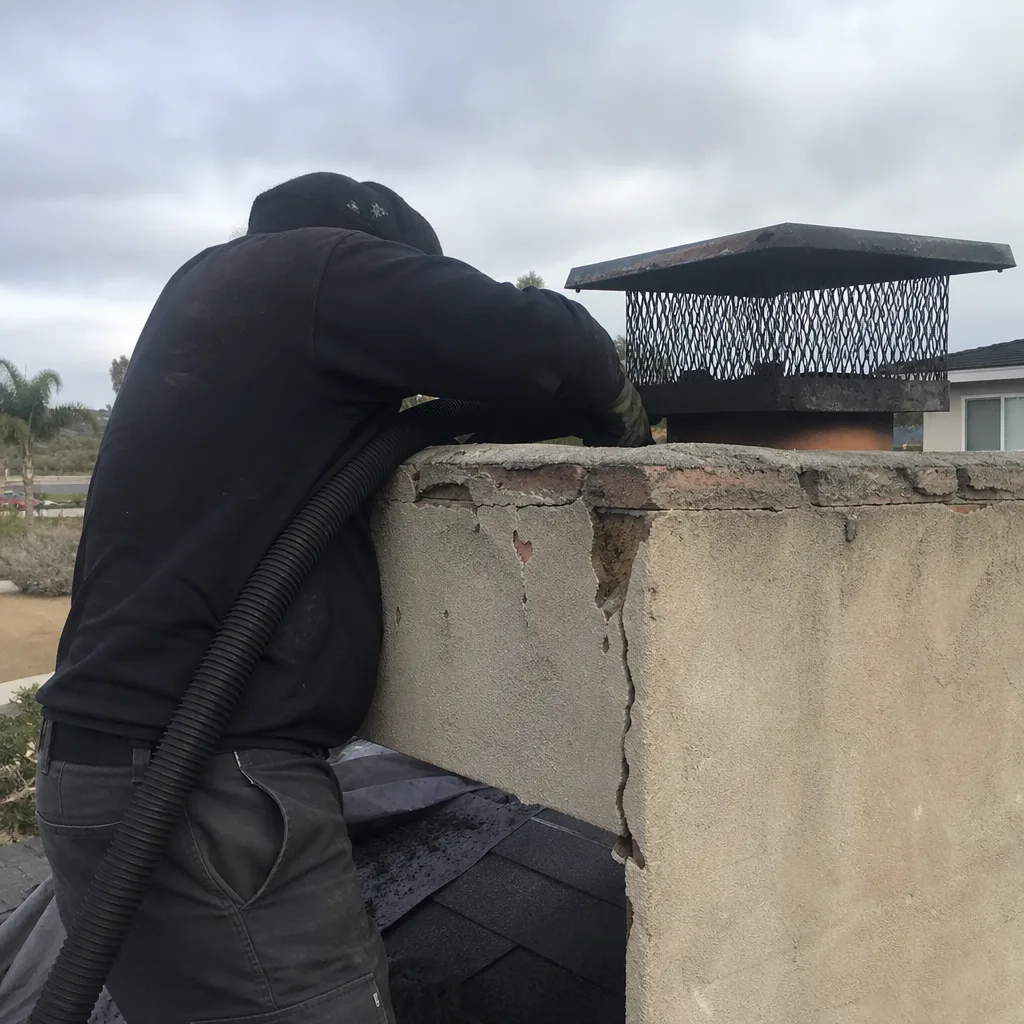 Before
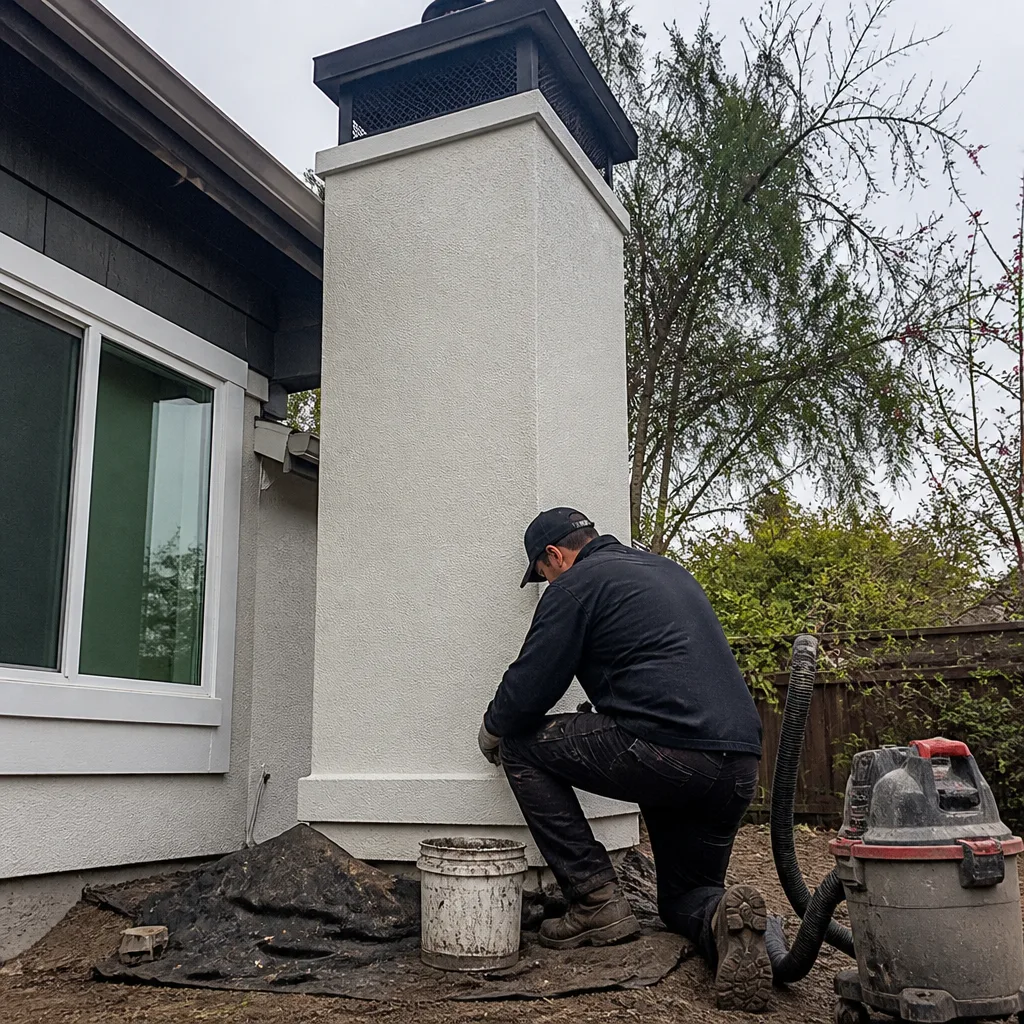 After
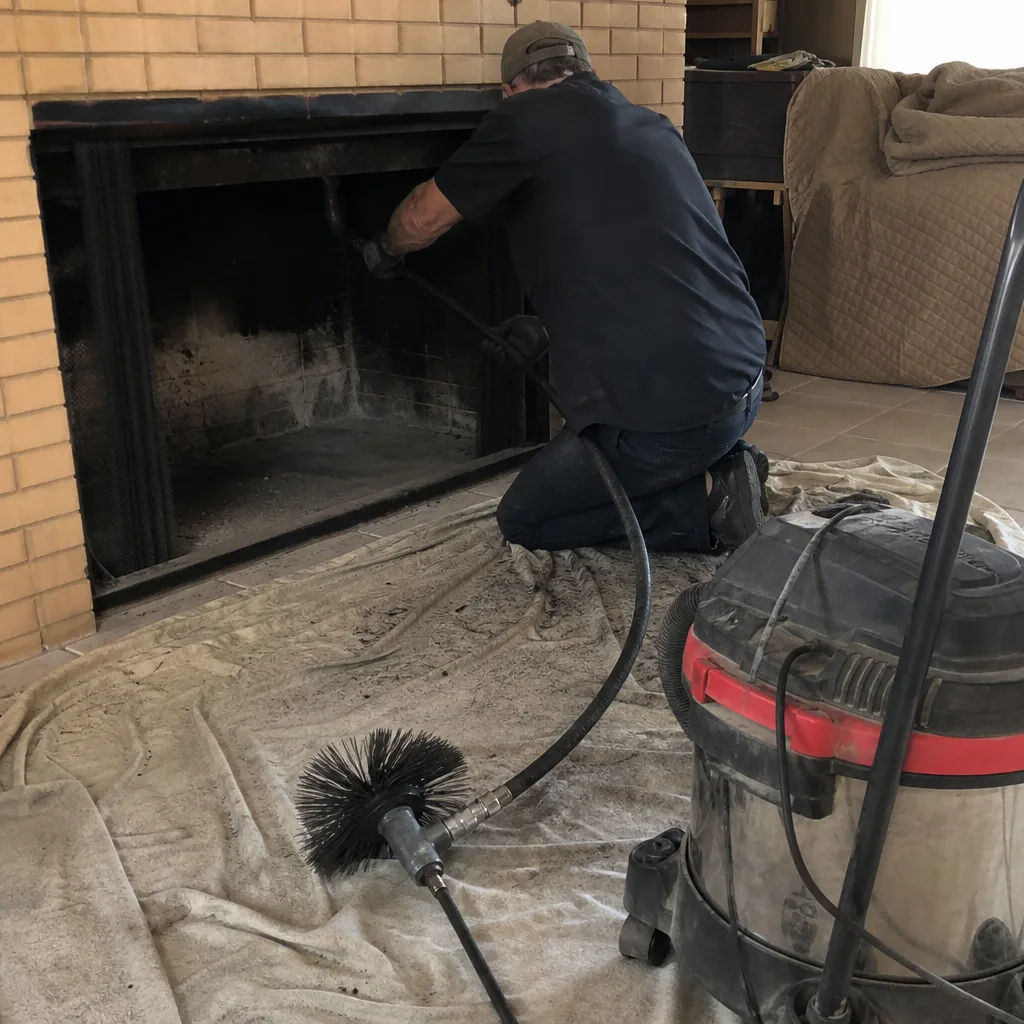 Before
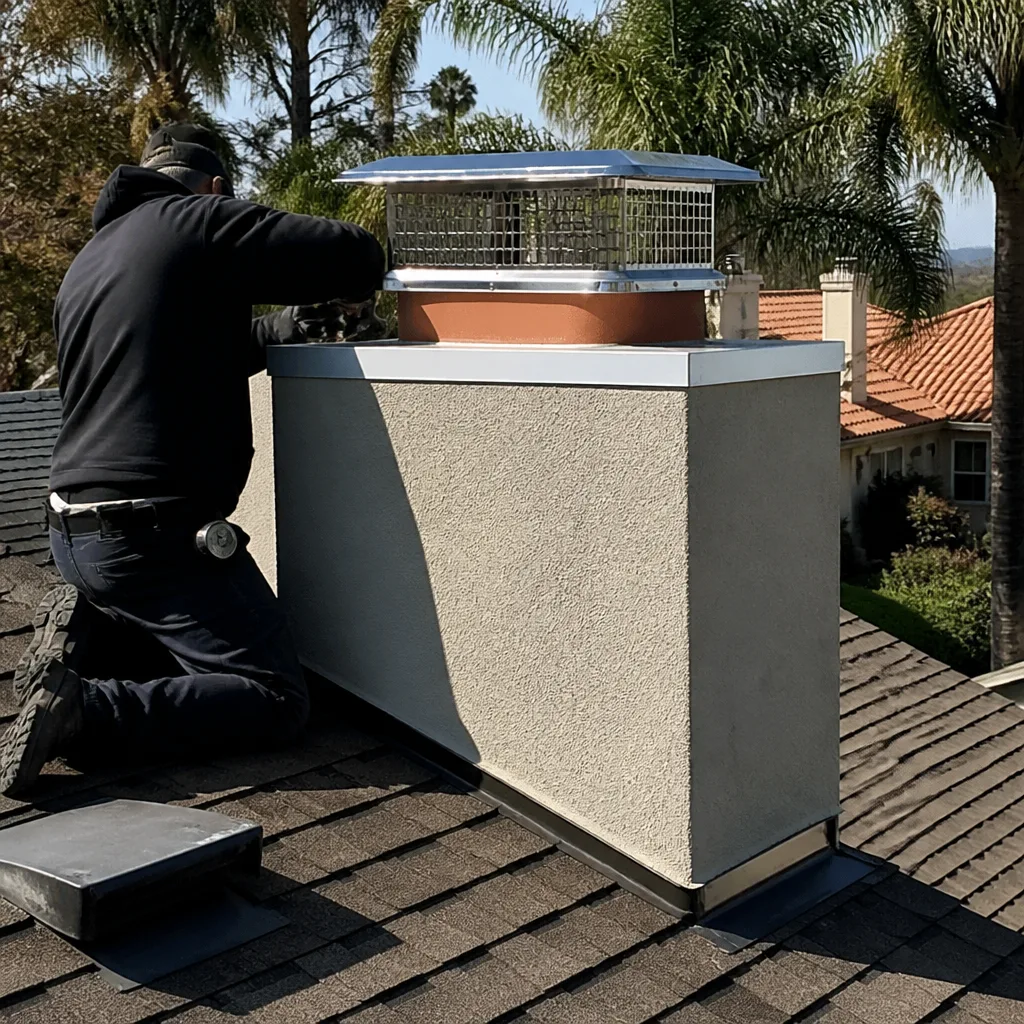 After
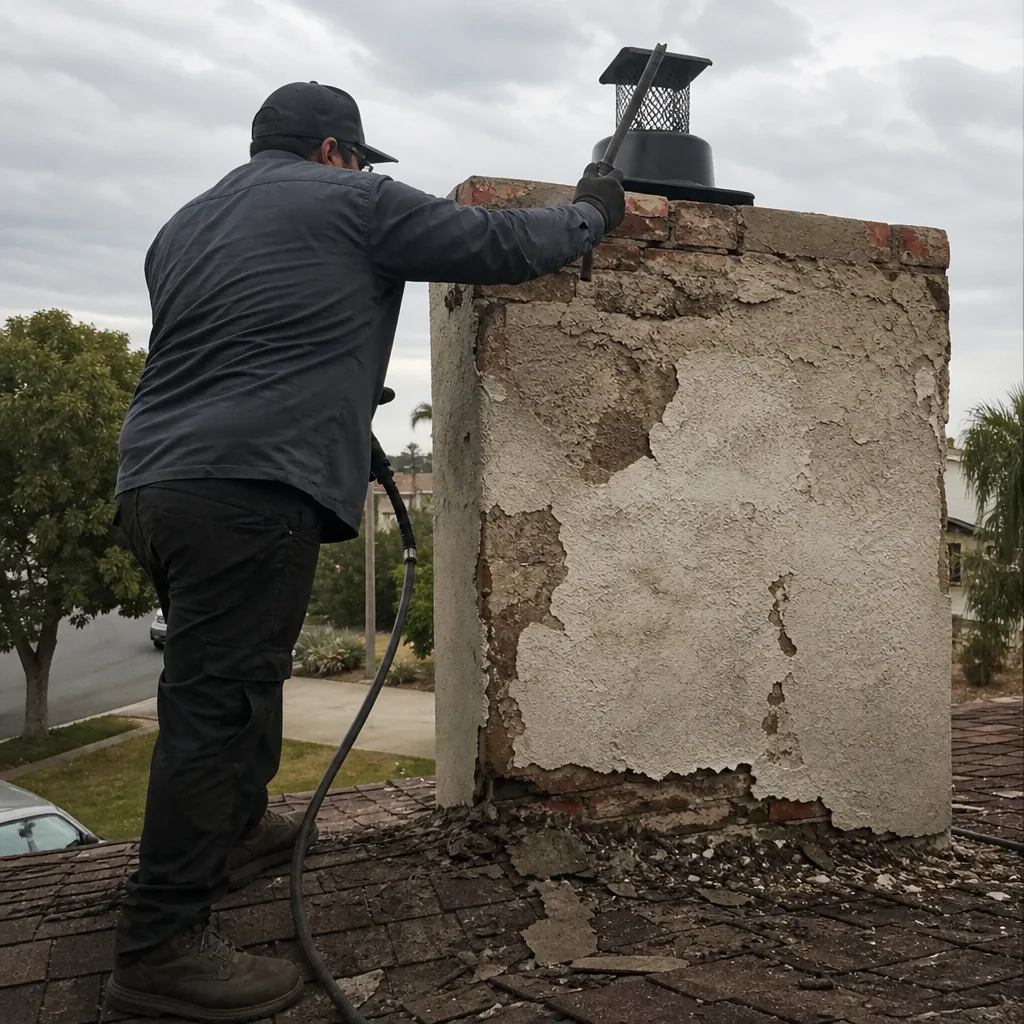 Before
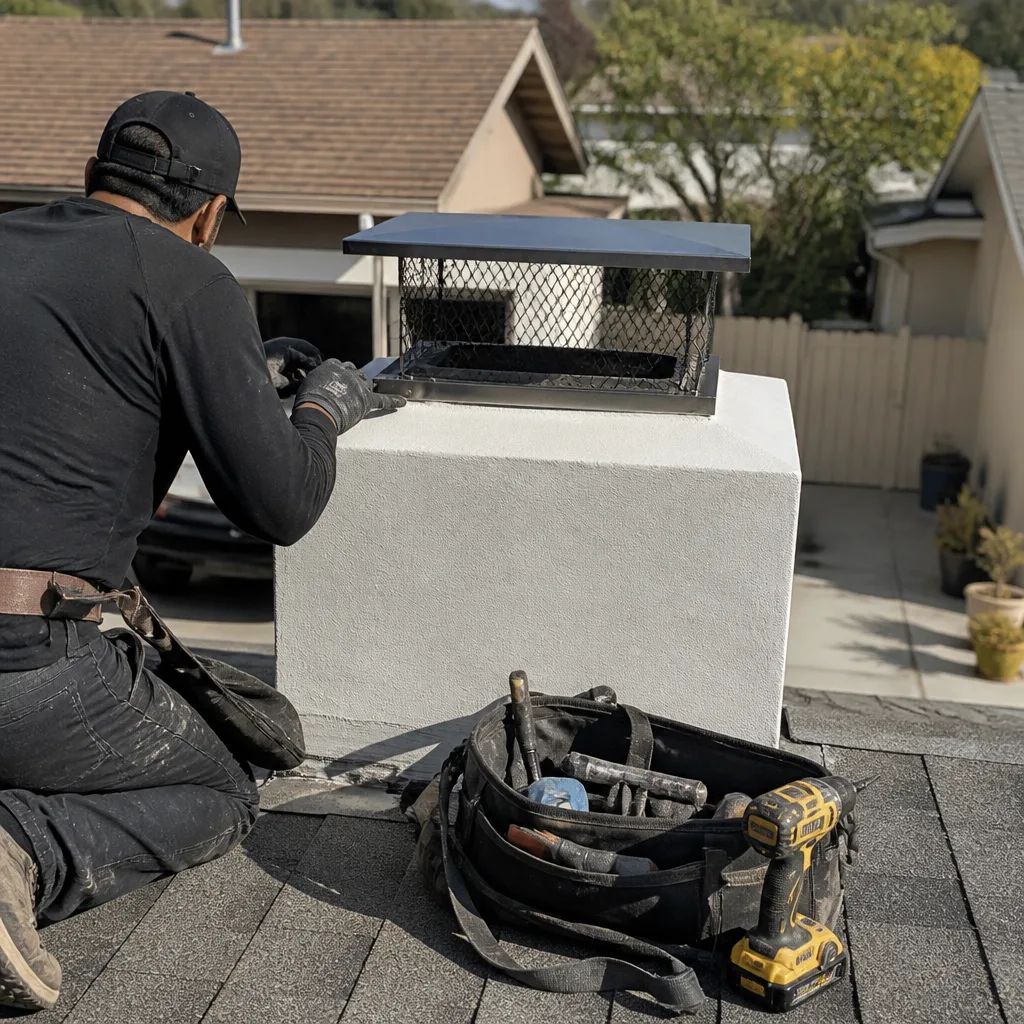 After
Pricing for Chimney Sweep in Vista, CA
Here’s what you can expect to pay for a Chimney Sweep in Vista. A standard open-flue fireplace sweep runs $189 – $329. A Level 1 inspection added to the sweep is $129 – $199. A Level 2 camera inspection runs $249 – $399. Creosote removal beyond the standard sweep adds $80 – $180, depending on severity and flue length. What changes the price most in Vista is flue height on two-story tract homes and the condition of the cap or spark arrestor, which often needs repair or replacement after a Santa Ana season. We give a flat-price sweep agreement before booking, so you know the number before we arrive. Estimates are free, and the camera report is included.
We Also Serve Cities Near Vista
Our home base is San Marcos, and we’re in Vista multiple days a week. We also serve North City, Carlsbad, and Oceanside, covering inland North County’s coastal and hillside neighborhoods. If you’re just over the line, call us. One call covers both fire hazards, chimney and dryer vent, in a single visit.
Serving Vista, CA – Our Local Coverage Area
We’re based in the Vista area and know this community well. Use the map below to see our service coverage – if you’re nearby, we can almost certainly help.
FAQs About Chimney Sweep in Vista
In Vista’s 1970s and 1980s tract homes, two or three factory-built fireplaces often share a single chase. A clog or cap gap on one unit can cross-contaminate the other’s vent, pushing combustion gases back into the adjacent home. That’s why we recommend a Level 2 inspection that scopes both flues whenever a Vista home shares a chase. Cleaning one flue in isolation can miss the exact failure that matters. Call (866) 651-2603 if you share a stack and want both flues checked.
Even if you burn only a few fires a year, an annual inspection is the right interval in Vista. The dry months bring birds and palm debris onto caps, and the Santa Ana season loosens flashings and bends spark arrestors before a single fire is lit. A sweep you skip because you barely burn is exactly the sweep that finds a packed cap the day before you light the first fall fire. Annual is the baseline. Camera inspection catches what the naked eye can’t.
We find two types in Vista: soft sooty creosote near the top of the flue and hard third-degree glazed creosote near the smoke chamber. The glaze forms because Vista fires burn low and slow after long idle periods, which produces concentrated deposits that harden instead of flaking. A standard brush won’t remove glazed creosote. It takes professional removal methods, and in some cases HeatShield restoration to repair the flue surface. Call (866) 651-2603 for an exact quote after we scope it.
Santa Ana winds strip or bend spark arrestors, loosen caps, and break flashing seals on clay-tile flues. After a wind event, water and debris get into the smoke chamber, which accelerates spalling and lets birds in during the calm that follows. In Vista’s fire-risk periods, a bent spark arrestor is a safety issue, not a maintenance note. We check caps and spark arrestors on every sweep, and repair them with Copperfield or Famco components when needed.
Yes. Most of the fireplaces we clean in Vista are factory-built metal units from the 1970s through the 1990s. They require different brushes, rods, and inspection methods than masonry chimneys, and Vista has enough of both that a specialist needs to handle each correctly. We service both, along with the clay-tile flues that often vent those metal fireplaces. If you have a factory-built fireplace and haven’t had it scoped, call (866) 651-2603 for a free estimate. We’ll tell you what you’ve got and what it needs.
Vista’s Shared Chases and Stacked Flues: Why a Single-Flue Sweep Misses the Point
Vista’s 1970s and 1980s inland tract homes often stack two or three factory-built fireplaces on a single chase. Sometimes one flue vents a neighbor’s appliance. Sometimes both flues share a crown. Sometimes a cap gap on one unit lets a bird nest drop debris into the other. When a technician cleans one flue without checking the adjacent stack, the risk is pushing debris or cross-drafting combustion gases back into the other home. We see this on tight streets across 92083 and in the older downtown-adjacent blocks where attached units were built around the same time. This isn’t a theoretical concern. It’s the single most common shared-flue failure in Vista, and a brush-and-go sweep won’t catch it. A Level 2 inspection will.
On a tight 92083 street off the downtown grid, our tech pulled palm-frond debris and a packed bird nest from a DuraFlex-lined flue on a 1978 two-story tract home, then found third-degree creosote glazing near the smoke chamber that a brush alone would not touch. Because the neighboring unit vents into the same chase, we scoped both flues, re-seated the shared chimney cap and checked the spark arrestor before calling the draft good. That’s the Vista job: adjacent stacks, shared crowns, and the honest truth about what each flue needs. We find it, we fix it.
Written by Noel Stratton, Owner at Chimney Cleaning San Marcos. Your flue is our only focus.