
Last updated November 2, 2026
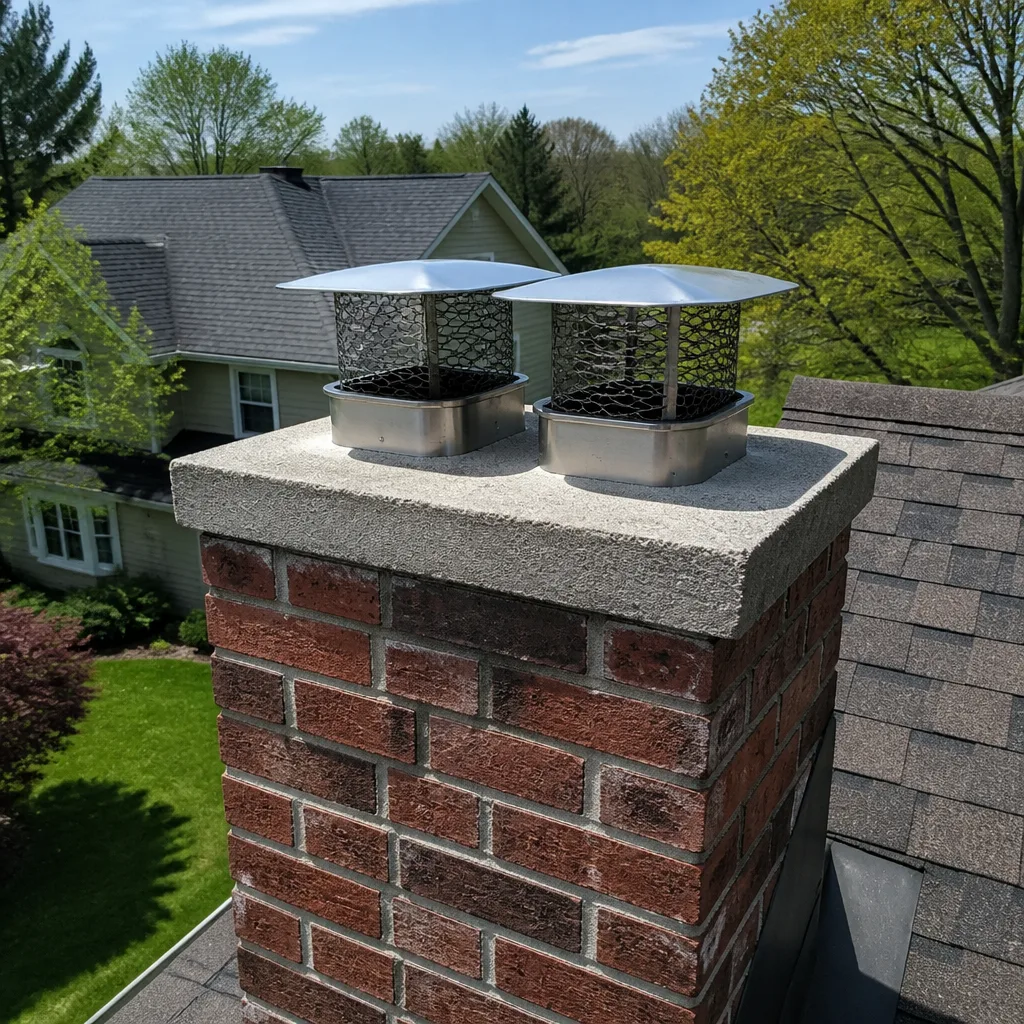 Sweep & inspection
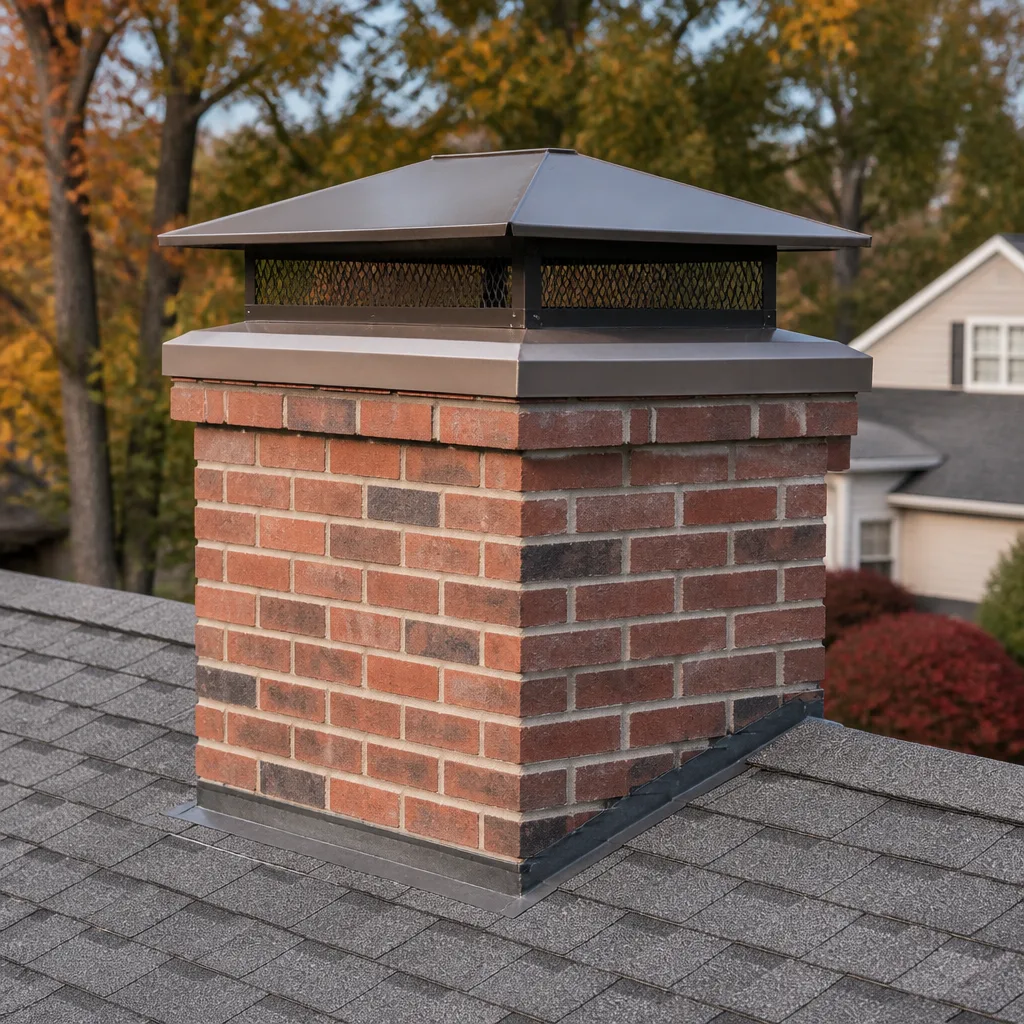 Caps & crowns
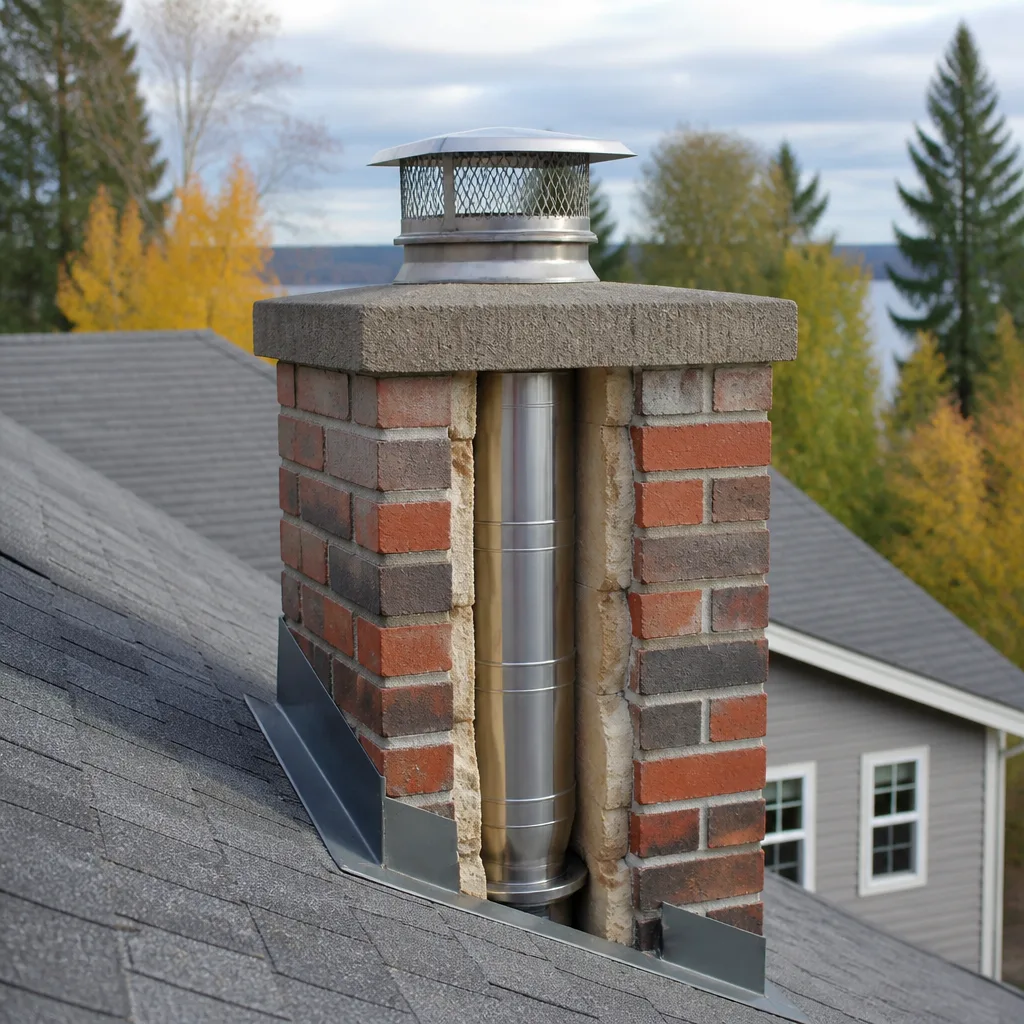 Flue relining
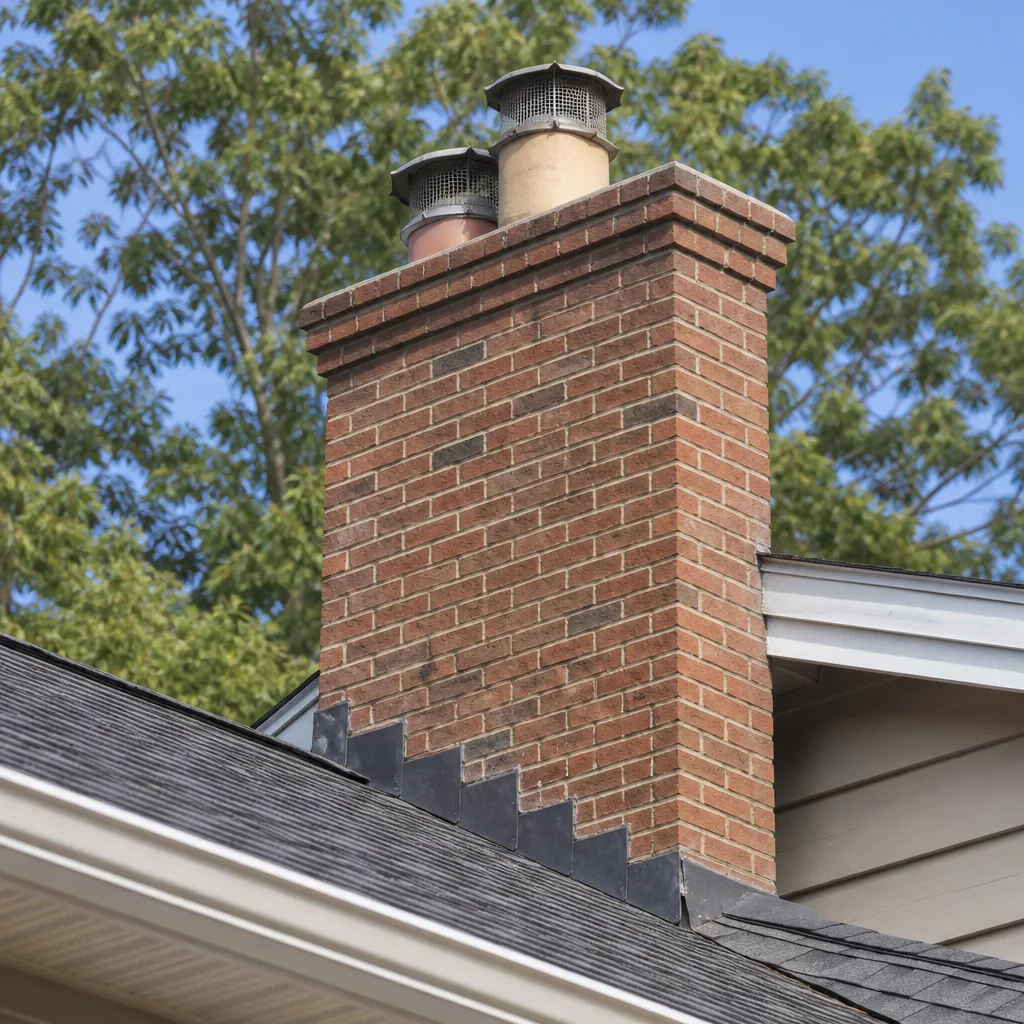 Masonry repair
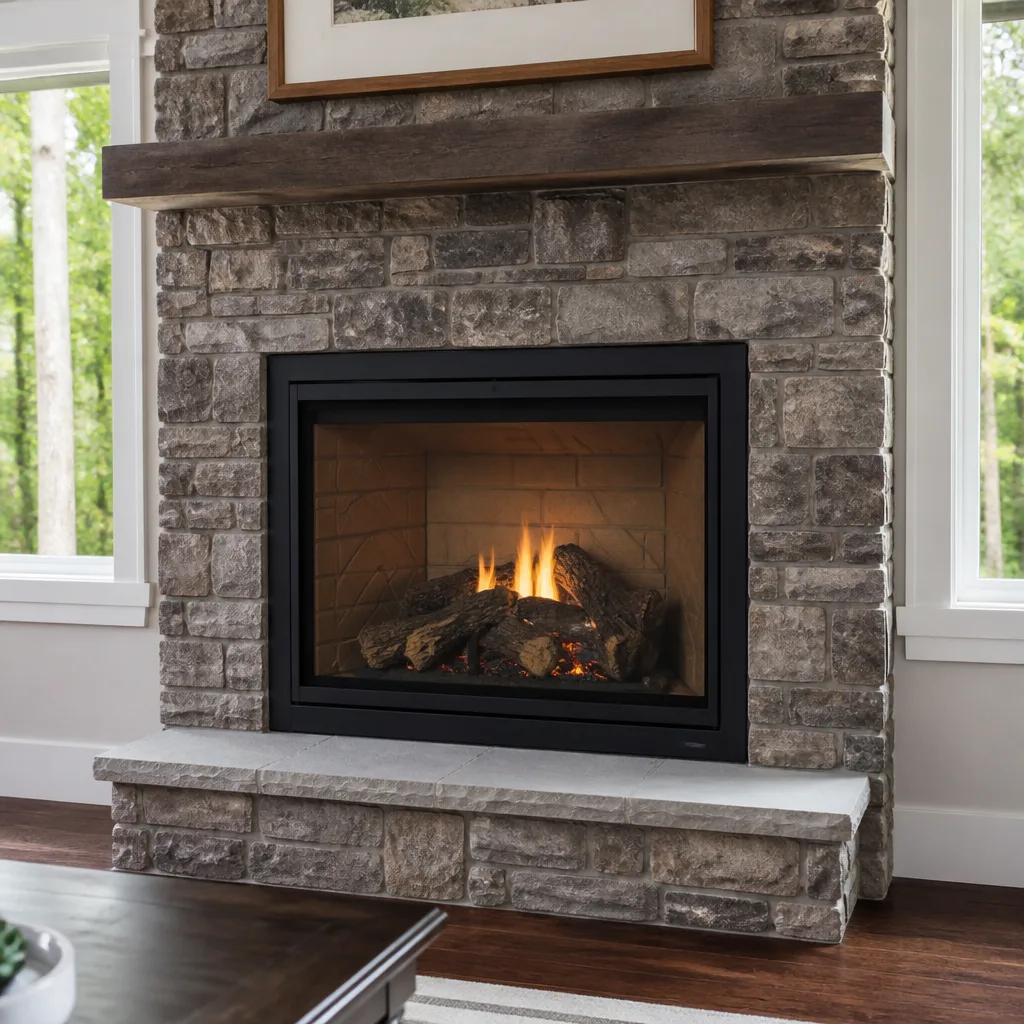 Gas fireplace service
Level 1 sweep and inspection to the NFPA 211 annual standard - flue, crown, cap, and flashing checked and photographed
Chimney sweep logs do not sweep chimneys. They loosen some creosote - which then falls where a brush and vacuum still have to collect it.
Chimney Cleaning Emergency Preparedness Guide for San Marcos Homes
A chimney fire burns at roughly 2,000°F and can be over in minutes. The homeowners who walk away with minimal damage aren’t the lucky ones. They’re the ones who knew two things in advance: how to recognize a chimney fire starting, and exactly what to do in the first 60 seconds. This guide gives you both, plus the San Marcos-specific context that changes how you prepare. By the time you finish, you’ll have a working emergency plan, not just a smoke detector that tells you it’s already too late.
Quick Answer
Chimney emergency preparedness in San Marcos means having a written response plan before a chimney fire ever starts: know the Chimney Cleaning Warning Signs: A San Marcos Homeowner’s Reference Guide (a deep roaring sound, dense smoke shifting color, visible sparks from the cap), know the immediate response sequence (close the damper, evacuate, call 911 from outside), and keep documentation of your last chimney inspection and cleaning on file because your insurance adjuster will ask for it. In a designated high fire hazard severity zone, the stakes are higher and the documentation requirements are stricter.
Styles & brands we work with
- Sweep & inspection
- Caps & crowns
- Flue relining
- Masonry repair
- Gas fireplace service
Table of Contents
- Why San Marcos’s Fire Zone Designation Changes the Math
- How to Recognize an Active Chimney Fire
- The First 60 Seconds: Immediate Response Sequence
- The First 3 Minutes: What to Do Before the Fire Department Arrives
- What to Tell the Fire Department When They Arrive
- Documentation and Insurance: What Your Adjuster Will Demand
- Post-Event Protocol: The Level 2 Inspection Before Relighting
- Preparedness That Prevents Emergencies
Why San Marcos’s Fire Zone Designation Changes the Math
San Marcos sits within a CAL FIRE-designated high fire hazard severity zone. That’s not a bureaucratic label. It means the vegetation, terrain, and seasonal weather patterns in this part of San Diego County create conditions where a fire that escapes a structure can spread faster than the local response time. For chimney owners, this designation has a direct, practical consequence: a chimney fire that ejects sparks from the cap isn’t just a flue problem. It’s a potential ignition source for a wildfire that could involve neighboring homes.
We’ve seen what happens when homeowners treat chimney maintenance as a cosmetic chore in high-risk zones. Creosote builds up in layers. The exterior layer looks flaky and dry; underneath it’s a dense, tar-like accumulation that burns hot and long. In San Marcos, where winter evenings frequently dip into the 40s and fireplaces get used regularly from November through February, that accumulation can reach critical mass in a single season if the chimney wasn’t swept before first use.
The CAL FIRE zone designation also intersects with insurance. Many policies covering San Marcos homes now include language requiring documented chimney maintenance as a condition of coverage for fire-related claims. A homeowner who files a chimney fire claim without a record of professional cleaning within the prior 12 months may find the claim denied or reduced. We recommend keeping your Chimney Sweep Maintenance Checklist for San Marcos Homeowners and sweep invoice in a folder with your policy documents. It’s the cheapest insurance upgrade available.
This guide is built around the premise that preparedness isn’t a smoke detector on the ceiling. It’s a specific, rehearsed plan for a specific type of fire. The sections that follow give you that plan.
If you’re starting from scratch on maintenance, start with a chimney sweep in San Marcos before the season begins. The best emergency response is the one you never have to use.
How to Recognize an Active Chimney Fire
Most chimney fires are not subtle. The problem is that many homeowners don’t recognize them because they’ve never been told what to look and listen for. A chimney fire produces three distinct signals: sound, sight, and heat. Learning all three is the difference between catching a fire in its first minute and discovering it when the structure is compromised.
Sound: The most commonly reported chimney fire sound is a deep, low roar, often compared to a freight train or a jet engine spooling up. It’s the sound of air being pulled rapidly through the flue to feed an intense, contained fire. Some homeowners also report popping or crackling sounds that are louder and more violent than normal wood crackling.
Sight: Dense, dark smoke billowing from the chimney is a warning sign, but the more diagnostic signal is smoke that changes color. A normal wood fire produces gray or white smoke that dissipates. A chimney fire produces thick, black, or dark brown smoke that sometimes carries visible flames or glowing embers from the top of the cap. If you see sparks or flames exiting the chimney top, the fire is already advanced.
Heat: A chimney fire produces heat that radiates through the masonry. If the wall surrounding your chimney feels unusually hot to the touch, or if you notice heat distortion in the air near the chimney, you’re likely dealing with a flue fire. In some cases, homeowners report the chimney’s exterior surface becoming hot enough to discolor paint or blister nearby wall surfaces.
The single most important recognition skill is pattern-breaking. A normal fire sounds like a fire. A chimney fire sounds like a machine. If you hear something that doesn’t belong, treat it as a fire until proven otherwise. The cost of a false alarm is a fire department visit. The cost of ignoring it is a structural fire.
The First 60 Seconds: Immediate Response Sequence
When you suspect a chimney fire, the order of your actions matters. The following sequence is designed to maximize life safety first and property protection second. Rehearse it mentally every time you light a fire this season.
- Close the damper. This is the only action you should take at the fireplace itself. Closing the damper cuts off the oxygen supply to the flue, which can slow or starve the fire. Do not open the fireplace doors. Do not throw water into the fireplace. Water on a hot flue can crack the liner and superheated steam can cause explosive expansion.
- Alert everyone in the house. Yell “chimney fire” loudly and clearly. Do not assume everyone heard you.
- Evacuate the building. Everyone leaves immediately. Close doors behind you as you go, but do not stop to gather belongings. Closing doors slows fire spread.
- Call 911 from outside. Never call from inside a burning structure. Tell the dispatcher you have a chimney fire, give your exact address, and state whether everyone is out of the house.
- Do not re-enter the home. Wait for the fire department. If you have a garden hose and the fire department hasn’t arrived, you may wet down the roof and exterior walls near the chimney from a safe distance, but only if you can do so without approaching the house.
This sequence should take less than a minute. The damper closure is the only fireplace-adjacent action. Everything else is about getting people out and getting professional help moving toward you. In a San Marcos neighborhood with narrow streets or tight driveway access, the fire department may need several extra minutes to position equipment. Every second you save with a rehearsed response is a second they can use.
The First 3 Minutes: What to Do Before the Fire Department Arrives
Once everyone is out and 911 has been called, the next three minutes are about containment and information gathering. You’re not fighting the fire. You’re managing the scene so the professionals can work effectively.
If it’s safe to do so without approaching the house, walk the perimeter and note where smoke is exiting the structure. Smoke from the chimney cap only suggests the fire is still contained in the flue. Smoke from the eaves, roof joints, or wall penetrations suggests the fire has spread into the attic or wall cavities. This information is valuable to the incident commander and can save the crew critical minutes.
Move any vehicles away from the driveway and clear the path to the front door. Fire crews need clear access. A car parked in the turnaround or a gate that’s padlocked can cost more time than the fire itself.
If you have a garden hose and the fire department hasn’t arrived, wet down any combustible material near the house perimeter: stacked firewood, dry vegetation, patio furniture, propane tanks. In San Marcos, where summer-dried brush and eucalyptus debris accumulate quickly, a spark ejected from the chimney cap can ignite ground-level material in seconds. A wet perimeter is cheap insurance.
Do not attempt any interior firefighting. Do not re-enter the home for any reason. Do not climb onto the roof. The fire department has the training and equipment to handle an active chimney fire safely. What they need from you is information and a clear path.
What to Tell the Fire Department When They Arrive
When the first engine arrives, the incident commander needs specific information quickly. Your job is to deliver it clearly and concisely. The following details help the crew make faster, safer decisions.
- Where the fire started: “It’s in the chimney, we believe the flue. We heard the roaring sound and closed the damper.”
- Who is accounted for: “Everyone is out. We have four people here, all accounted for.” If someone is missing, say so immediately.
- Where smoke is showing: “We saw smoke from the cap first, then smoke from the attic vent on the north side.” This tells them whether the fire is still contained or has spread.
- What’s inside the house: “Standard construction, wood framing, no propane inside. The fireplace is in the living room at the back.”
- Any hazards: “There’s ammunition in a safe in the garage” or “We have oxygen tanks in a bedroom” are critical pieces of information. Do not withhold them.
After the fire is suppressed, the fire department will typically leave you with a report or incident number. Keep this document. Your insurance company will request it, and a Level 2 inspection professional will want to see it before beginning work. The fire department may also tag the fireplace as unsafe for use until inspected. That tag is your signal that a chimney repair in San Marcos is now a requirement, not an option.
Documentation and Insurance: What Your Adjuster Will Demand
After a chimney fire event, your insurance adjuster will ask for specific documentation. Knowing what to have ready before the call can smooth the claims process and protect your coverage position. The following is what we’ve seen San Marcos homeowners asked for most often.
Pre-fire maintenance records: The adjuster wants to know the chimney was professionally swept and inspected before the fire. If you have invoices from a chimney sweep showing the date, scope, and findings of the last cleaning, have them ready. A missing maintenance record is the most common reason chimney fire claims get reduced or denied.
The fire department incident report: This documents the official cause determination and the scope of the response. Request a copy at the scene if possible, or follow up with the department’s records office in the days after the event.
A post-fire Level 2 inspection report: This is the professional assessment of what the fire did to the flue, liner, and surrounding structure. The inspection uses a camera system to examine the interior of the flue without further damage. The resulting report includes still images and a written finding. This report is typically required before the insurance company will authorize repair or rebuild work.
Photographs of the damage: Document everything before cleanup begins. Wide shots of the room, close-ups of the fireplace, and any visible damage to the cap, crown, or exterior chimney surfaces.
In San Marcos’s high fire hazard severity zone, some policies include additional requirements around defensible space and chimney maintenance documentation. Read your policy’s fireplace and chimney section now, before an emergency. The time to discover a coverage gap is not the day after a fire.
Post-Event Protocol: The Level 2 Inspection Before Relighting
After any chimney fire, regardless of how small or quickly it was contained, the chimney must be professionally inspected before anyone lights another fire in it. This is not optional. A chimney fire can crack the flue liner, damage the masonry, and compromise the cap, all of which are invisible from the outside. Relighting a fire in a damaged flue is an invitation for a second, more serious fire.
A Level 2 inspection is the standard for post-fire assessment. It includes:
- A visual examination of all accessible portions of the chimney, interior and exterior
- A video camera scan of the entire flue, from the firebox to the cap
- An assessment of the flue liner for cracks, spalling, or separation
- An evaluation of the chimney cap, crown, and flashing
- A check of clearances between the chimney and combustible materials
On camera, a compromised liner shows as hairline cracks, gaps between joints, or areas where the liner surface has bubbled or flaked away. What a homeowner sees as “a little soot” is often the first visible sign of liner failure. If the liner is cracked, the chimney cannot safely contain the next fire’s heat and combustion gases.
Depending on what the inspection finds, repair options range from spot repair to full liner replacement. Products like HeatShield allow for liner restoration in many cases where the damage is not structural. DuraFlex and Copperfield materials are industry-standard choices when a full liner replacement is needed. A chimney company that offers Chimney Cleaning San Marcos home services can perform both the inspection and the repair in the same relationship, which matters when you’re trying to get your fireplace back into service before the next cold snap.
Preparedness That Prevents Emergencies
The most effective emergency response is the one you never have to use. Chimney fire prevention in San Marcos comes down to a few specific, repeatable practices. None of them are complicated. All of them matter.
Annual sweeping, scheduled before the burn season: In San Marcos, fireplace use typically begins in November and runs through February. Schedule your chimney sweep for September or early October, before the first fire. A chimney that was swept last March has already accumulated eight months of nesting material, debris, and whatever moisture condensation the coastal air produced. Sweep it again.
Burn the right fuel: Burn seasoned hardwood with a moisture content under 20%. Green wood, soft woods like pine, and treated lumber all produce more creosote and burn less efficiently. If you’re buying firewood by the cord, ask the seller when the wood was split and how long it’s been seasoning. A reputable seller will know the answer.
Keep the air flowing: A smoky, smoldering fire produces more creosote than a hot, bright fire. Build smaller, hotter fires and give them enough air to burn cleanly. If your fireplace has glass doors, open them slightly while the fire is active and close them when the fire burns down.
Address the venting you can’t see: Your chimney isn’t the only fire-hazard flue in the house. The dryer vent cleaning in San Marcos addresses the other most common residential fire-hazard flue. A clogged dryer vent is the leading cause of dryer fires, and most homeowners haven’t had the vent cleaned since the dryer was installed. One call can cover both fire hazards in a single visit.
Common Mistakes to Avoid
We’ve compiled the most common mistakes San Marcos homeowners make before, during, and after a chimney fire. Each one is avoidable with a little preparation.
- Throwing water into a burning fireplace. Water on a hot flue can crack the liner instantly, and the resulting steam explosion can send hot debris into the room. Close the damper and evacuate. That’s the entire response.
- Assuming the fire is out because the sound stopped. A chimney fire can smolder in a flue for hours after the visible flames and roaring stop. A fire can appear to be over when it’s actually burning slowly inside the masonry. Always have the chimney inspected after any suspected chimney fire.
- Skipping the post-fire inspection because “it looked fine.” Flue liner cracks are invisible from the outside. A chimney that looks fine from the living room can be structurally compromised. Relighting without an inspection is how second fires happen.
- Filing an insurance claim without maintenance documentation. In San Marcos’s fire zone, the absence of a sweep invoice can be the difference between a covered claim and a denied one. Keep your records.
- Cleaning the chimney with a store-bought brush kit and calling it done. Professional sweeping dislodges creosote that a basic brush can’t reach, and a professional inspection catches liner damage before it becomes a fire. The big-box kit is not a substitute for a certified sweep.
- Burning pine and other softwoods because they’re cheap. Softwoods produce more creosote and burn less efficiently. The savings at the wood pile disappear into the cost of more frequent sweeps and higher fire risk.
- Ignoring the dryer vent because it’s not a chimney. Dryer vents cause thousands of house fires annually. The same preparedness mindset that protects your chimney should extend to your dryer vent.
See the difference
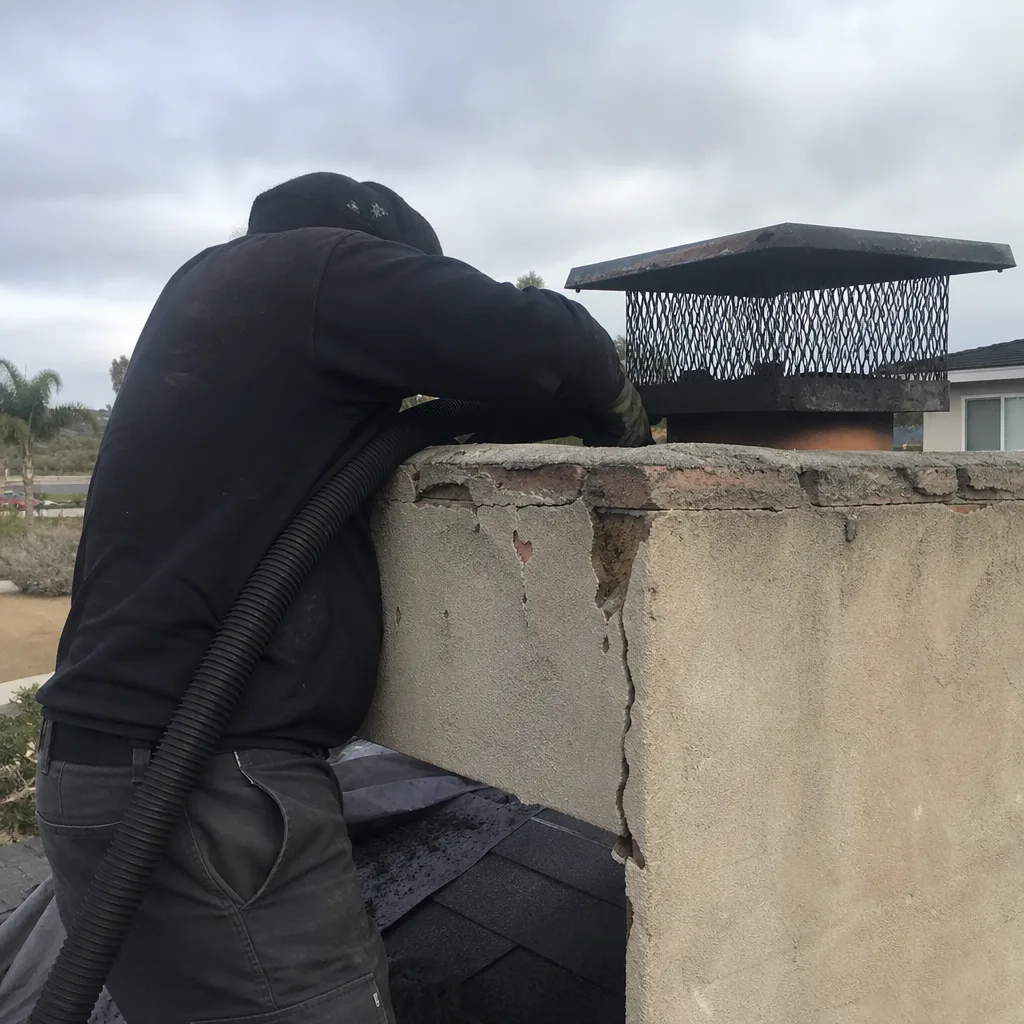 Before
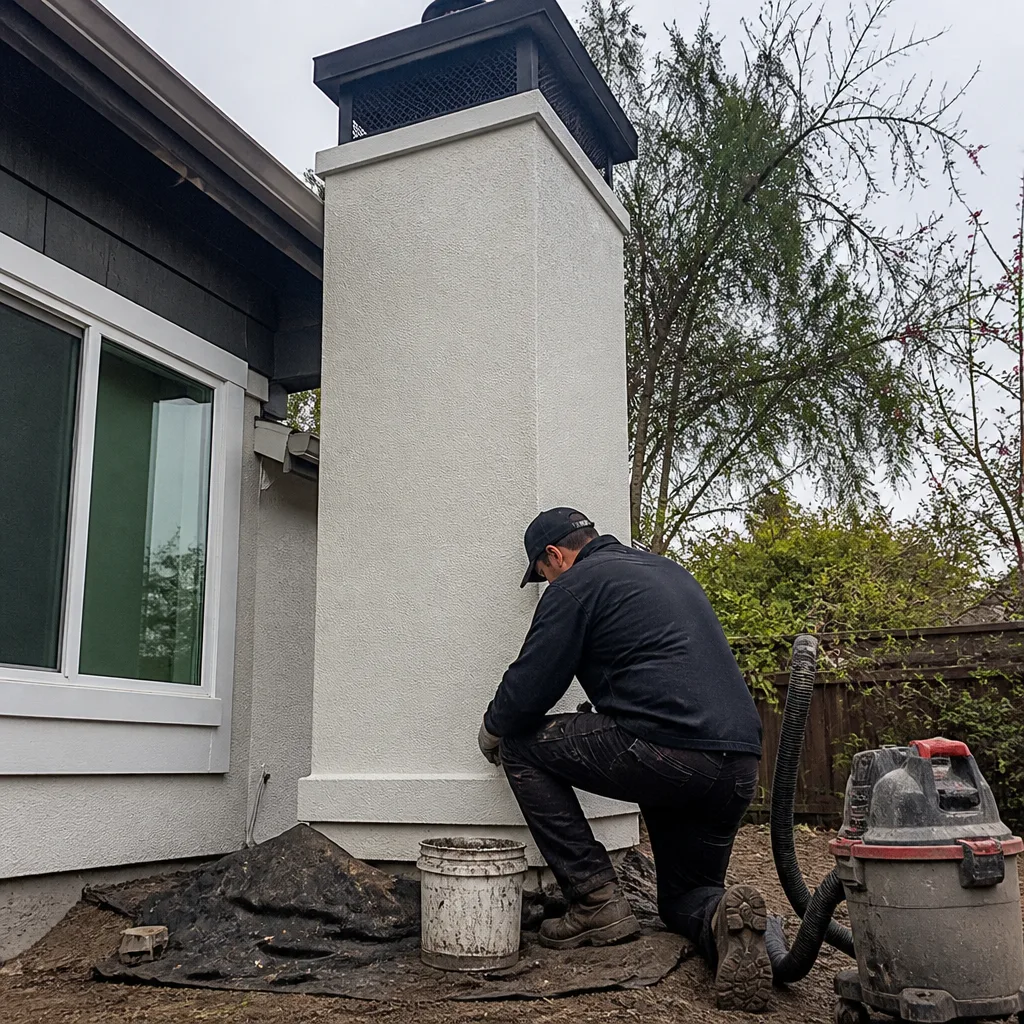 After
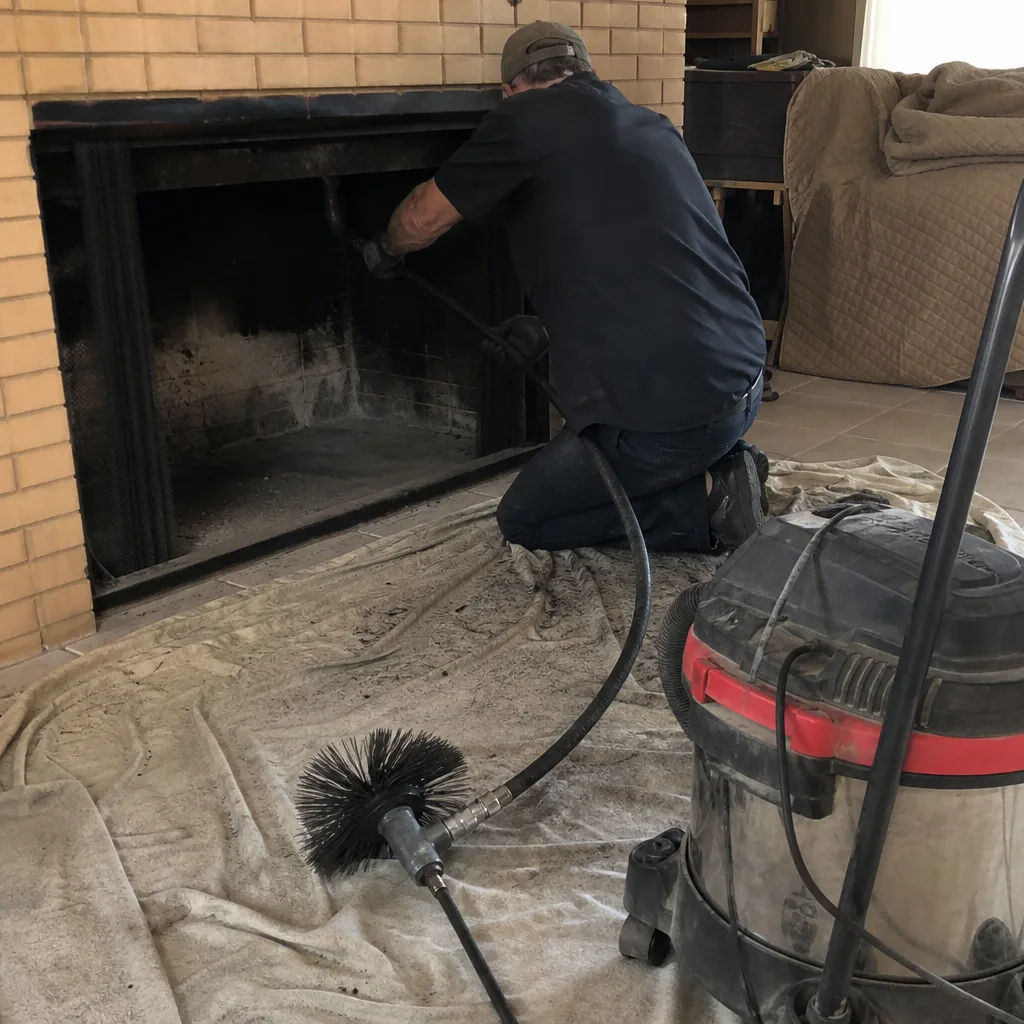 Before
 After
 Before
 After
When to Call a Professional
Some situations require a professional, not a plan. Call a certified chimney specialist if you suspect a chimney fire has occurred, even a small one. Call if you hear roaring or popping sounds from the fireplace that don’t match normal wood burning. Call if you see thick, dark smoke or sparks from the chimney cap. Call if you haven’t had the chimney swept in over a year and you’re about to start burning regularly. Call if you’ve had a home insurance provider ask for maintenance documentation and you can’t find it. For more guides & resources, visit our blog, or call Chimney Cleaning San Marcos at (866) 651-2603 for a free estimate.
Frequently Asked Questions
A chimney in San Marcos should be swept at least once per year, ideally in early fall before the burning season begins. Homes that burn fires more than three nights per week or that burn softwoods may need a second sweep mid-season. The primary variable is creosote accumulation, which varies with fuel type and burn frequency. A professional sweep removes both the flaky surface creosote and the denser, tar-like accumulation that a basic brush can’t reach. If you’re not sure when your last sweep happened, schedule one now. Call (866) 651-2603 for a free estimate in San Marcos.
The three primary warning signs are sound, sight, and heat. The sound is a deep, low roar like a freight train, often accompanied by popping or crackling. The sight is dense, dark smoke, sometimes with visible flames or sparks from the chimney cap. The heat signal is an unusually hot chimney wall or heat distortion near the chimney surface. Any one of these signals justifies calling 911. All three together mean a fire is already active.
Yes. A Level 2 inspection is the only way to determine whether the flue liner survived the fire intact. The inspection uses a video camera to examine the interior of the flue from firebox to cap, looking for cracks, separation, or spalling that would allow heat and combustion gases to reach combustible materials. Skipping the inspection and relighting a fire in a compromised flue is how second, more serious chimney fires happen. The inspection report is also typically required by insurance adjusters before a claim can move forward.
Creosote accumulates in layers. The first layer is flaky and easy to remove. Each subsequent burn bakes the previous layers into a dense, tar-like substance that burns hotter and longer than wood. After a few seasons without cleaning, the flue can have a quarter-inch or more of creosote lining the walls. A hot fire can ignite this lining, producing a chimney fire that burns at up to 2,000°F and can crack the flue liner, split masonry, and spread into the attic or wall cavities. The upside of skipping cleaning is saving the cost of a sweep. The downside is losing the house. In San Marcos’s fire zone, the risk is even higher. Call (866) 651-2603 for a free estimate.
In most cases, no. The only safe action you take at the fireplace is closing the damper to cut off oxygen. Do not throw water onto the fire, do not use a fire extinguisher inside the fireplace, and do not climb onto the roof. The fire department has the training and equipment to suppress a chimney fire safely. Your job is to evacuate the house, call 911, and provide the crew with information when they arrive.
The fire department’s goal is to suppress the fire inside the flue and confirm it hasn’t spread to the surrounding structure. Crews typically deploy a specialized nozzle down the chimney to apply water directly to the fire, or they use a compressed air and water mixture to knock down the flames and cool the flue. They will also check the attic and wall cavities around the chimney for heat using thermal imaging or manual inspection. After suppression, they’ll leave an incident report and may tag the fireplace as unsafe for use until a professional inspects it.
The Bottom Line
Chimney fire preparedness in San Marcos isn’t a fire extinguisher mounted on the wall. It’s a specific plan: know the warning signs of an active flue fire, know the immediate response sequence, keep your maintenance documentation organized, and never skip the annual sweep. The high fire hazard severity zone designation means the consequences of a chimney fire here are higher than in most of California, and the insurance requirements are stricter. The most important step is the one you take before burning season starts: get the chimney professionally swept and inspected. The plan is only as good as the flue it protects.
Written by the team at Chimney Cleaning San Marcos, serving San Marcos since 2018.